
From an hour of admin per booking to under 7 minutes
LINT is a creative production venue in downtown Los Angeles, co-founded and operated by our principal, Michael R. Speciale. Taking one booking from inquiry to contract and invoice used to cost 45 to 60 minutes of hands-on work. It now takes the team 5 to 7 minutes, with a person approving each step.
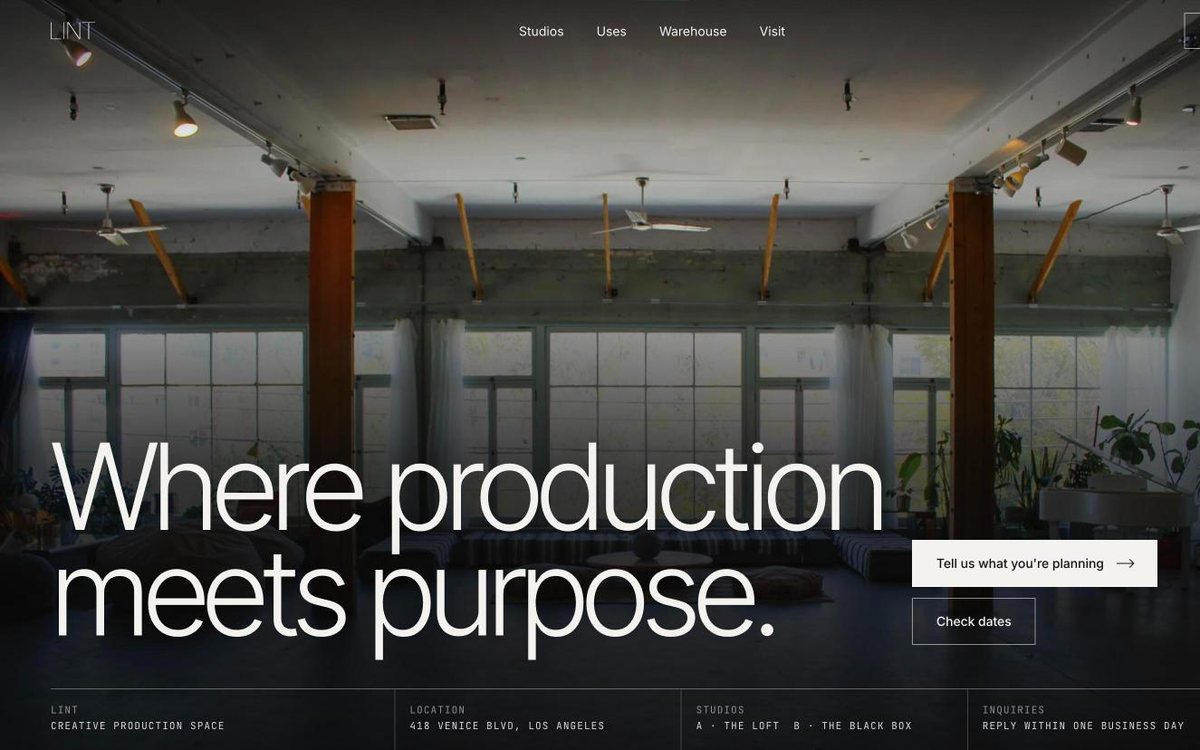
The situation
Every step after the inquiry form was manual. Each reply was written by hand, and the owner reviewed every quote. The booking record, the contract, and the invoice were each built separately for every booking. A quote took 15 to 20 minutes, and the record, contract, and invoice took another 30 to 40. Follow-up depended on someone remembering.
What we built
- We simplified the pricing into one all-in rate card that a client can follow in one sentence. That simplification is what made automated quoting possible.
- We rebuilt the website around one call to action and a five-step inquiry form that shows live availability and an estimate.
- We automated the drafting and left the sending to people. When an inquiry arrives, the system files the record, drafts the quote, and tells the team which inquiries need manual review. It follows up twice if the client does not reply.
- We put confirmation on one page, where the client confirms the details, signs the agreement, and pays the deposit. The calendar and the booking record update themselves.
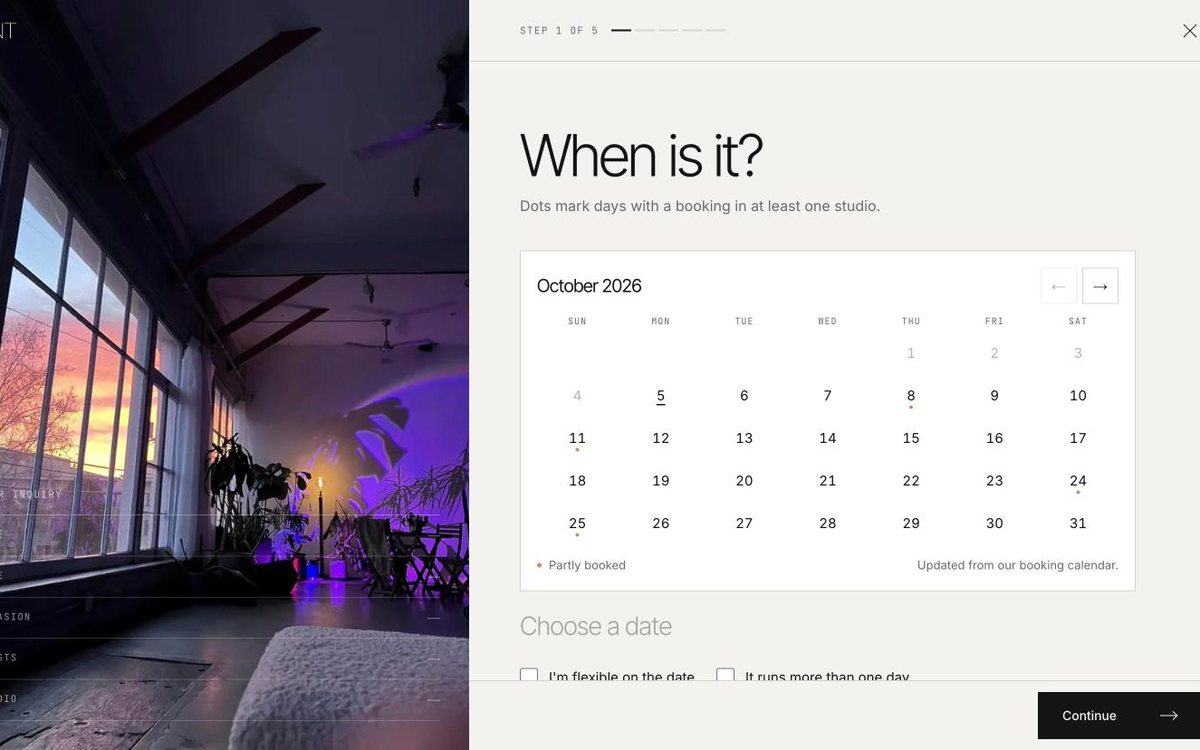
What changed
A standard booking now needs a person at three points: approving the quote, holding the date, and running the event. Everything between those points is drafted, filed, or sent by the system. The hands-on work for one booking went from 45 to 60 minutes to 5 to 7 minutes. Every draft is still reviewed by a person, and deciding whether an event fits the venue remains a person's call.
A booking used to move forward only when someone remembered it. Now nothing waits on memory, and every important decision still waits for a human.
Related case studies.
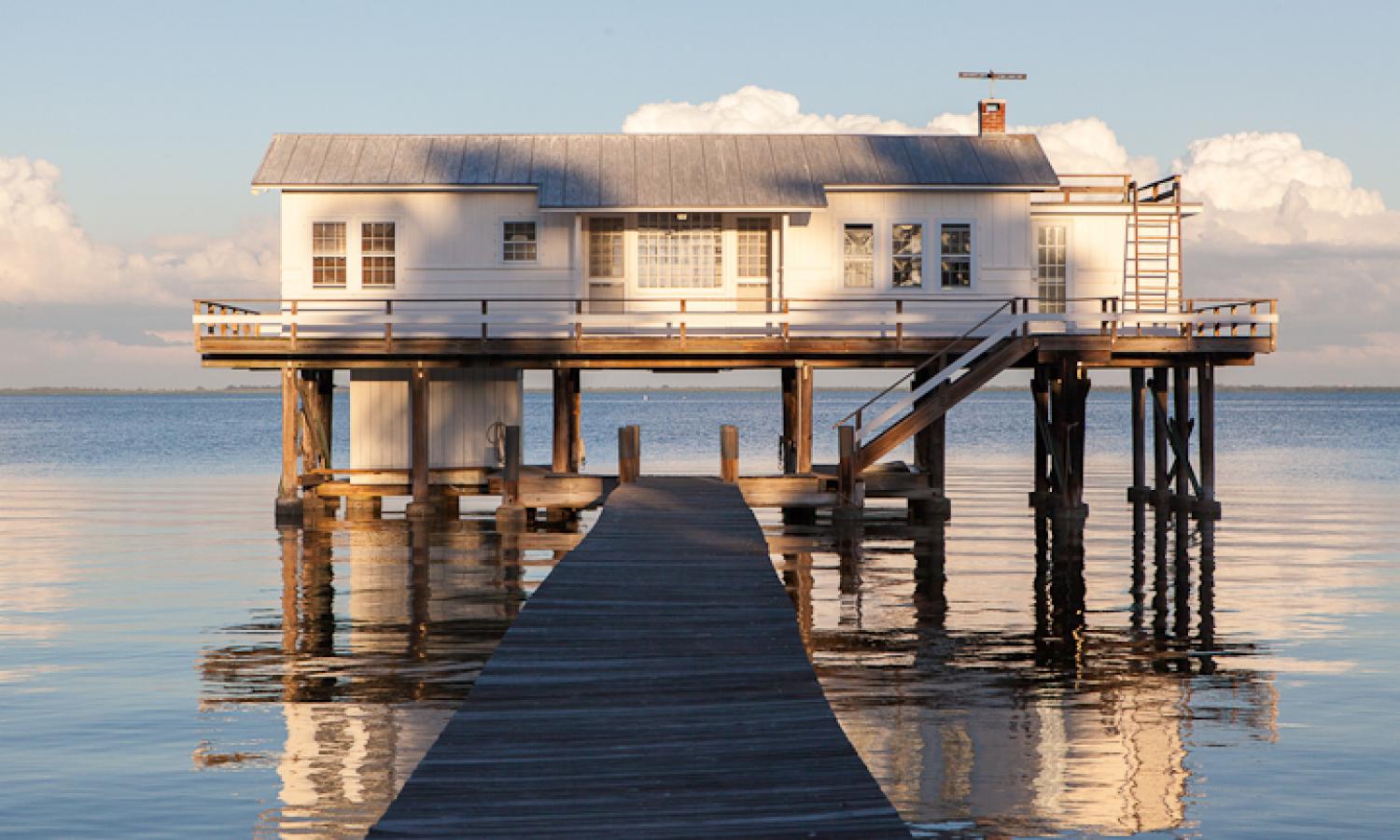
A residency's operations, built to be run by its own staff
The invitation and intake system ran live for the 2023–24 cohort. The facilities system carried the island through a hurricane recovery. A staff owner was trained to build on both.
When the right answer was an off-the-shelf tool
We built a custom client portal and tested it with the team. The Nest decided that day-to-day work belonged in Asana, and we agreed. The prototype showed what the system needed to do.
Leaving a fiscal sponsor without breaking the organization
A community arts organization was preparing to leave its fiscal sponsor. We modeled what independence would cost, built the project tracker, and ran the vendor process.
Want this kind of clarity for your organization?
Book a free 30-minute call. Tell us what's happening, and we'll tell you where we would start.